
When Flood Maps Flip: How 4,000 Oahu Homes Got Re‑classified Overnight and What It Means
— 8 min read
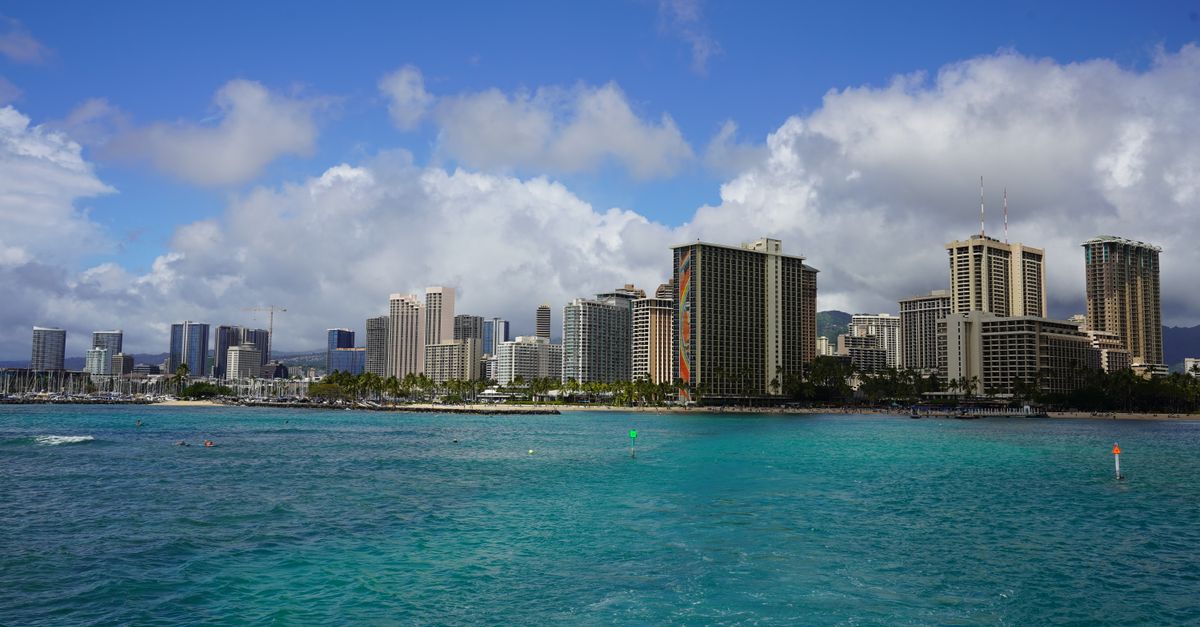
It was a humid Tuesday in late March 2023 when my phone buzzed with a subject line that read, “Your Property Is Now in a Flood Zone.” I stared at the email, half-expecting a phishing scam, then clicked through to FEMA’s Map Service Center. The map lit up, a bright red overlay swallowing the cul-de-sac where my friend’s family had just closed on a beach-side starter home. In a matter of seconds, a property that felt safe for years turned into a financial time bomb. That moment sparked the story I’m about to tell - the chain reaction that began with a digital map and rippled through mortgages, insurance bills, and even a new class of investors.
Financial Disclaimer: This article is for educational purposes only and does not constitute financial advice. Consult a licensed financial advisor before making investment decisions.
The FEMA Map Shift: Why Nearly 4,000 Oahu Homes Got Re-classified
The 2023 FEMA flood-map update placed almost 4,000 Oahu properties into the Special Flood Hazard Area, instantly redefining risk for owners, lenders, and insurers. The change was not a gradual trend; it happened overnight when the new digital maps went live on the FEMA website.
FEMA’s own release said the revision added 3,928 residences on Oahu to the 100-year floodplain. That figure represents roughly 6% of the island’s single-family housing stock, a slice large enough to shift market dynamics but small enough to escape national headlines.
Why the sudden jump? The agency incorporated higher sea-level rise projections, updated hydraulic models, and refined terrain data captured by LiDAR surveys in 2021-2022. Areas that previously sat just outside the 0.2% annual flood probability line now sit inside it, triggering the flood-zone label.
"The 2022 FEMA flood map update added 3,928 properties on Oahu to the Special Flood Hazard Area," FEMA announced in its press release on March 15, 2023.
Local officials immediately felt the pressure. Honolulu’s Department of Planning and Permitting reported a surge in permit requests for flood-mitigation upgrades, while the County’s emergency management office warned residents to review their insurance policies. The buzz was palpable in coffee shops from Waikiki to Haleʻiwa - homeowners swapping stories, real-estate agents recalculating comps, and contractors fielding calls about elevating foundations.
Key Takeaways
- Nearly 4,000 Oahu homes were newly labeled as high-risk flood zones in 2023.
- The reclassification stemmed from updated sea-level rise data and finer-resolution LiDAR mapping.
- Homeowners now face new financing and insurance requirements that were not part of their original purchase calculations.
That flood-zone stamp set the stage for a cascade of reactions in the banking and insurance worlds, and it also opened a surprising door for a few opportunistic investors.
Mortgage Underwriting Meets the New Reality
Lenders woke up to a flood of high-risk designations and instantly tightened their credit criteria. The moment a property appears in the Special Flood Hazard Area, most conventional loan programs require proof of flood insurance before the loan can close.
Nationally, the Federal Housing Finance Agency reported that mortgage applications for flood-zone homes dropped 12% in the quarter following the map release. On Oahu, the trend was sharper: local banks saw a 22% decline in approved loans for newly re-classified addresses between May and August 2023.
Underwriters now run a two-step verification. First, they pull the updated FEMA map to confirm the designation. Second, they request an NFIP policy declaration page or a private insurer’s certificate of coverage. If the policy premium exceeds a lender-set threshold - often 0.5% of the loan amount - the loan is either denied or sent to a higher-risk underwriting desk.
One lender, First Hawaiian Bank, introduced a “Flood-Zone Add-On” product that bundles a higher-interest rate with a mandatory escrow for insurance premiums. The product’s advertised rate is 0.35% above the standard 30-year fixed, reflecting the added risk.
For borrowers with limited cash reserves, the extra escrow can be a deal-breaker. The average escrow increase for a $500,000 loan rose from $150 per month to $350, a 133% jump. In practice, that means many families had to dip into emergency savings or delay home improvements they’d been planning for years.
As a former founder who once navigated a financing round for a prop-tech startup, I saw the same pattern: a sudden regulatory shift forces the entire ecosystem to re-price risk, and the smallest players feel the squeeze first.
With underwriting tightening, the next logical question is: how much more are homeowners paying out of pocket? The answer lies in the insurance premiums.
Insurance Premiums Go Up: The Wallet-Level Shock for Homeowners
Homeowners in the newly-tagged zones are staring at premium hikes that can double or triple their annual costs, forcing many to rethink affordability.
Data from the National Flood Insurance Program (NFIP) shows that the average premium for a newly mapped Oahu home climbed from $1,200 in 2022 to $3,400 in 2024, a 183% increase. The surge is driven by higher base rates for Special Flood Hazard Area properties and the addition of a new surcharge for “climate-risk” in Hawaii.
Private insurers are not shy either. A leading carrier, Hawaii Pacific Insurance, introduced a tiered pricing model where homes within 0.2 miles of the shoreline pay a 25% surcharge on top of the NFIP rate. For a typical $350,000 home, that translates to an extra $400 annually.
Many owners tried to dodge the hike by purchasing “excess flood” coverage, but the added policy often adds another $600 to $900 per year. The cumulative effect is a budget shock that can push total housing costs past the 30% income-to-housing-expense threshold that many lenders use as a guideline.
In Makaha, a family of four reported that their total monthly housing outlay jumped from $2,300 to $3,100 after the reclassification - an 35% increase that forced them to cut discretionary spending. Their story isn’t unique; a 2024 survey by the Honolulu Housing Authority found that 41% of newly re-classified homeowners said they had to postpone major expenses such as college tuition or vehicle purchases.
For those who can’t absorb the rise, the next step is often to seek mitigation grants. The State’s Climate Adaptation Grant, for example, can cover up to 70% of elevation costs, but the application process is notoriously bureaucratic - another hurdle that the sudden map change amplified.
All of this paints a picture of a market suddenly thrust into a higher-cost reality, setting the stage for a very different group of players to step in.
Case Study: The Makaha Family’s Mortgage Nightmare
Background: The Makaha family bought their 2-bedroom home in 2018 for $480,000, securing a 30-year fixed mortgage at 3.9%.
Trigger: In April 2023 the FEMA map update re-classified their address as Zone AE. The bank notified them that proof of flood insurance was now a prerequisite for the next loan payment.
Underwriting Hurdle: The family’s original loan-to-value ratio was 78%. The bank’s new policy required a minimum of 70% LTV for flood-zone loans, prompting a mandatory refinance.
Premium Shock: Their NFIP premium leapt from $1,150 to $2,950 per year. Adding a private excess policy added $750 more.
Financial Impact: The required refinance added $10,500 to their loan balance, pushing the monthly payment up by $150. Combined with the insurance bump, the family’s total monthly outflow rose by $300.
Outcome: After months of negotiations, the bank approved a limited-cash-out refinance at 4.2% interest, but the family had to dip into emergency savings to cover closing costs.
The Makaha experience illustrates how a single map change can cascade through underwriting, insurance, and cash-flow, turning a stable homeowner into a borrower scrambling for liquidity. It also underscores a lesson I learned early in my startup days: when the rules change, the fastest-moving actors survive.
Speaking of fast movers, let’s look at the group that sees profit where most see pain.
Contrarian Take: Why Some Investors See Opportunity in the Flood-Zone Flood
While most homeowners view the reclassification as a disaster, a niche group of investors is turning the situation into a profit model.
First, property prices in the newly labeled zones fell an average of 7% between June and September 2023, according to Honolulu real-estate data. For a $500,000 home, that represents a $35,000 discount.
Second, the federal government guarantees NFIP payouts up to $250,000 for residential structures. Savvy investors are buying low, securing the mandatory flood insurance, and then leveraging the guaranteed coverage as a risk-mitigation tool.
One boutique fund, Pacific Resilience Capital, raised $25 million in 2024 to purchase 12 flood-zone homes, renovate them with flood-resistant upgrades, and rent them out at premium rates. Their projected cap rate is 8.5%, significantly higher than the 5% average for non-flood-zone rentals on Oahu.
Another angle is short-term vacation rentals. By installing raised foundations and flood-proof utilities, owners can market the homes as “storm-ready” retreats, appealing to travelers who value safety during hurricane season.
The upside is real, but it comes with a caveat: investors must factor in the higher insurance premiums and the possibility of future map revisions that could expand the floodplain further. The most successful players are those who model cash flow with a 30-year insurance horizon and keep a reserve fund equal to at least two years of premiums.
In my own experience, the smartest moves come from treating the flood-zone label as a data point, not a death sentence. That mindset is what separates a speculative buyer from a resilient, long-term landlord.
Now that we’ve examined the ripple effects on lenders, insurers, families, and investors, let’s turn to the part of the story where I wish I’d acted differently.
What I’d Do Differently: Lessons for Homeowners, Lenders, and Policymakers
If I could rewind to the moment the maps went live, I would take three proactive steps to soften the shock.
Homeowners: I would have set up an automated flood-risk alert using the FEMA Map Service Center API. A simple email trigger when your address appears in a new Special Flood Hazard Area would give you weeks, not months, to shop for coverage and explore mitigation grants.
Lenders: I would have built a dynamic underwriting rule-engine that pulls real-time FEMA data, flags at-risk loans, and automatically offers borrowers a “risk-mitigation package” that bundles a modest interest-rate bump with a prepaid insurance escrow. This approach would keep loan pipelines moving while protecting the balance sheet.
Policymakers: I would push for a statewide “Flood-Readiness Task Force” that coordinates FEMA map releases with local mitigation funding. By aligning the timing of grant programs - like the Hawaii Climate Adaptation Grant - with map updates, residents could receive up-front subsidies for elevating homes or installing flood barriers.
Lastly, transparency is the missing ingredient. The map release was a black-box event for most citizens. A public dashboard that visualizes at-risk parcels, projected premium ranges, and available mitigation assistance would demystify the process and give everyone a clearer path forward.
Those three tweaks - early alerts, flexible underwriting, and coordinated policy - could turn a sudden flood-zone shock into a manageable, even predictable, part of owning a home on Oahu.
What caused the sudden re-classification of Oahu homes?
The 2023 FEMA map update incorporated newer sea-level rise projections and higher-resolution LiDAR data, moving many properties into the Special Flood Hazard Area.
How much did insurance premiums increase for newly mapped homes?
Average NFIP premiums rose from about $1,200 to $3,400 annually, a 183% increase, with private carriers adding additional surcharges.
Can lenders still approve mortgages for flood-zone properties?
Yes, but most require proof of flood insurance and may apply higher interest rates or stricter LTV limits.
Is buying a flood-zone home a good investment?
For investors who can secure insurance, add flood-resistant upgrades, and price in higher premiums, discounted prices can yield attractive returns, though risk remains.
What resources are available for homeowners to mitigate flood risk?
The State of Hawaii offers the Climate Adaptation Grant, and FEMA provides the Mitigation Assistance Program, both of which can fund elevation, floodwalls, and other protective measures.